
Email Marketing in the Modern Era: Why the Oldest Digital Channel Is Still the Most Powerful
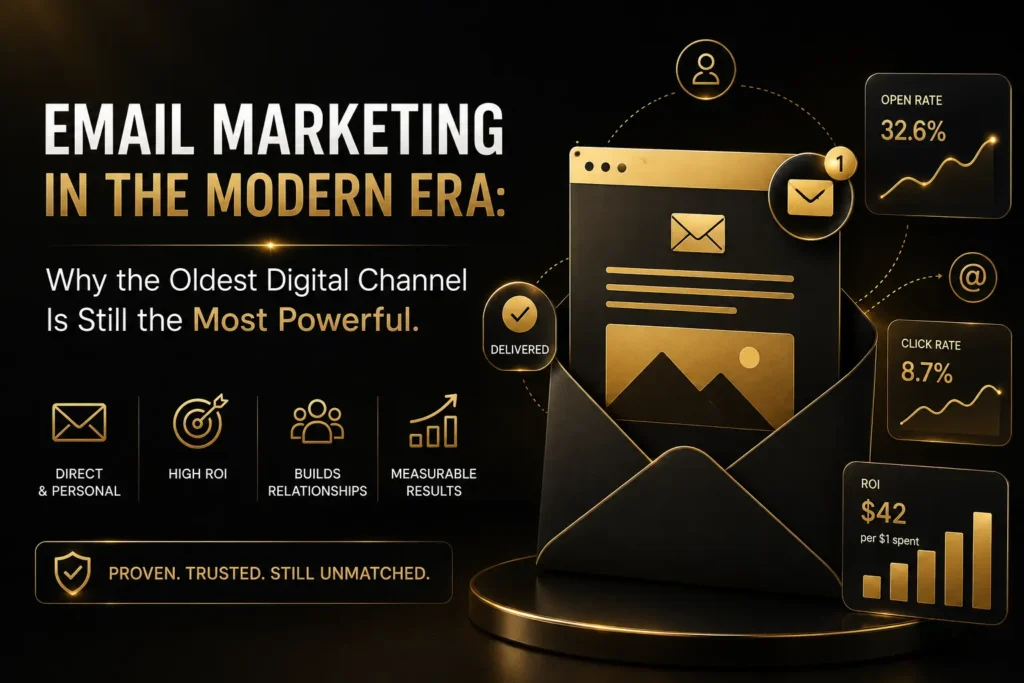
Every few years, someone declares that email marketing is dead. Social media will replace it. Messaging apps will take over. Younger generations supposedly don’t use email anymore. Yet despite these predictions, email marketing continues to deliver some of the highest returns in digital marketing, generating an average of $36–$42 for every dollar spent.
The truth is simple: email is not dead—it has evolved. Brands that understand modern email marketing still have access to one of the most powerful, cost-effective tools available today.
Why Email Still Wins
What makes email different from other digital channels is ownership.
When someone follows your brand on social media, your content competes with thousands of other posts, and platform algorithms decide how many people actually see it. Organic reach continues to decline, meaning businesses often need paid advertising just to reach their own audience.
Email works differently. When someone subscribes to your email list, you gain direct access to their inbox. Your email list is an asset you own. It isn’t controlled by changing algorithms or platform policies.
This direct connection creates a stronger relationship with your audience. Subscribers have already shown interest in your brand by opting in, making them far more valuable than casual website visitors or social media followers. Email allows businesses to nurture that interest over time, building trust and encouraging long-term engagement.
From Mass Emails to Personalized Experiences
Traditional email marketing focused on sending the same message to everyone on a mailing list. While this approach was once common, modern consumers expect more relevant communication.
Today’s successful email strategies rely on segmentation. Instead of treating subscribers as a single audience, marketers divide them into groups based on factors such as purchase history, interests, engagement levels, location, or customer journey stage.
This allows brands to send highly relevant content to specific audiences. A first-time customer may receive onboarding emails, while loyal customers receive exclusive offers or early product access.
Modern platforms also use behavioural triggers. Emails can be automatically sent when someone browses a product, abandons a shopping cart, downloads a resource, or becomes inactive for a certain period.
These automated, personalised experiences make email feel less like advertising and more like a helpful service. As a result, engagement and conversion rates increase significantly.
The Importance of Subject Lines
No matter how valuable an email is, it only works if people open it. That’s why the subject line is one of the most important elements of any email campaign.
Effective subject lines are clear, relevant, and engaging. They create curiosity without being misleading and communicate value without sounding overly promotional.
Some common approaches include:
* Creating curiosity by hinting at useful information.
* Personalising content using customer data.
* Highlighting urgency when appropriate.
* Clearly stating the benefit readers will receive.
For example, a straightforward subject line such as *”5 Ways to Increase Website Traffic This Month”* can often outperform a vague promotional message because the value is immediately obvious.
Regular testing of subject lines can lead to significant improvements in open rates and overall campaign performance.
Design and Deliverability Matter
Great content alone isn’t enough. Email design and deliverability play critical roles in campaign success.
Today, most emails are opened on mobile devices. If an email isn’t optimised for smartphones, a large percentage of recipients may have a poor experience.
Effective email design focuses on:
* Mobile responsiveness
* Clean layouts
* Clear visual hierarchy
* Readable text
* Strong call-to-action buttons
Equally important is deliverability—the ability of your emails to reach the inbox instead of the spam folder.
Deliverability depends on several factors, including sender reputation, email authentication, engagement rates, and list quality.
One of the most effective ways to maintain strong deliverability is through proper list hygiene. Removing inactive subscribers may seem counterproductive, but it improves engagement rates and helps maintain a healthy sender reputation.
A smaller, engaged list often performs far better than a large list filled with inactive contacts.
Building an Email List the Right Way
The quality of your email list is more important than its size.
Successful brands build their lists through genuine value exchange. Instead of simply asking for email addresses, they offer something useful in return.
Common lead magnets include:
* Guides and eBooks
* Checklists
* Templates
* Free tools
* Exclusive content
* First-purchase discounts
The key is relevance. The incentive should attract people who are genuinely interested in your products, services, or expertise.
Businesses should also optimise their websites for email capture through strategically placed signup forms, content upgrades, and exit-intent popups. When implemented thoughtfully, these methods can increase subscriptions without disrupting the user experience.
One practice that should always be avoided is purchasing email lists. Bought lists typically contain people who have no relationship with your brand, resulting in low engagement, poor conversion rates, spam complaints, and damaged sender reputation.
Growing an audience organically takes longer, but it creates a far more valuable and sustainable marketing asset.
Final Thoughts
Modern email marketing is no longer about sending as many messages as possible. It’s about delivering the right message to the right person at the right time.
The most successful brands use email to build relationships, provide value, and create meaningful customer experiences. Through personalisation, automation, segmentation, and thoughtful communication, email remains one of the most effective channels for driving engagement and revenue.
In an increasingly crowded digital landscape, where platforms rise and fall and algorithms constantly change, an email list remains one of the few marketing assets a business truly owns.
Invest in building it, nurture it consistently, and it will continue delivering value for years to come.
The inbox isn’t dying—it is simply waiting for brands that have something worthwhile to say.